
- May 25, 2026
- Posted by: CoachMike
- Categories: Options Trading, Stock Trading, Swing Trading, Trading Article

One of the biggest mistakes options traders make is using the wrong expiration cycle for the type of move they’re trying to trade. Not every setup should be traded with same-day expiration options, and not every trade needs 30–60 days until expiration.
Understanding when to use 0DTE, weekly, or monthly options can dramatically improve trade selection, risk management, and consistency.
The key is matching the expiration cycle to:
- The expected timing of the move
- Your strategy
- The amount of risk you want to take
- How much time you need the trade to work
Quick Expiration Decision Framework
Before choosing 0DTE, weekly, or monthly options, start with the speed of the market. The expiration cycle should match the move you expect, the time the trade needs, and the current market conditions.
| Market Condition | What It Suggests | Better Expiration Choice |
|---|---|---|
| Strong intraday momentum, active volume, and broad market participation | The market is moving fast enough to support shorter-duration trades. | 0DTE or very short-term options |
| A trade expected to work over 1–3 trading days | The setup needs some time, but not a full monthly cycle. | Weekly options with a few days left |
| Daily ATR below 6 or SPY volume below 70 million shares | The market may not be moving fast enough for aggressive short-term options. | Longer-dated weekly or monthly options |
| Choppy market with weak breadth | Directional follow-through is less reliable. | Avoid forcing short-term directional trades |
| A move that may need 3–20 trading days to develop | The trade needs more room for the thesis to play out. | 20–40 DTE options |
The mistake is choosing expiration based on how much profit the option could make. A better approach is choosing expiration based on how much time the trade realistically needs.
Let’s break down when to use each options type and when they make the most sense.
Before choosing 0DTE, weekly, or monthly options, start with the speed of the market.

Understanding the Three Main Expiration Types
1. 0DTE Options
0DTE (zero days to expiration) are options that expire the same trading day. These options have exploded in popularity over the last few years.
Over 50% of the daily volume in SPX options is done using the 0DTE options.

Across the Mag7 stocks and the index products, we are seeing 5-8+ million contracts trading on a daily basis. This trading has a huge impact on how markets now trade.
0DTE trading has exploded in popularity because it allows traders to:
- Risk smaller amounts of capital
- Capture fast market moves
- Potentially generate large percentage returns quickly
But with that opportunity comes significantly higher risk. With options that are this close to expiration, they react much quicker to changes in stock price and to time decay. This leads to a higher risk/higher reward scenario.
2. Weekly Options
Weekly options typically expire every Friday, although many major ETFs and large-cap stocks now have Monday, Wednesday, and Friday expirations.
These options usually have:
- A few days to 1–2 weeks until expiration
- Less aggressive theta decay than 0DTE
- More flexibility if the trade needs extra time
Weekly options allow you to remain very active but with more forgiveness than a 0DTE option. In some market conditions, the additional time to expiration will take some of the pressure off needing an immediate directional move in your favor.
3. Monthly Options
Monthly options expire on the third Friday of every month. These contracts can be beneficial in slower market conditions when you need to hold positions longer. They give you more time to let the stock price move in your favor without the time decay becoming an issue.
These options usually give us the following benefits:
- 30–60+ days until expiration
- Slower time decay
- Higher premium costs
- More room for a larger directional move to develop
0DTE vs Weekly vs Monthly Options: Quick Comparison
The expiration cycle should match how quickly the trade needs to work. A same-day setup, a multi-day setup, and a slower swing trade should not all use the same option expiration.
| Expiration Type | Typical Timeframe | Best Fit | When It Can Be the Wrong Choice |
|---|---|---|---|
| 0DTE Options | Expires the same trading day | Fast intraday trades where the market is already moving and the trade needs immediate follow-through. | When the market is slow, choppy, or the setup may need several sessions to work. |
| Weekly Options | A few days to roughly 1–2 weeks until expiration | Short-term trades expected to work over 1–3 trading days, especially when ATR, volume, and breadth support follow-through. | When the trader is using them for a slower swing trade that needs more time to develop. |
| Monthly / Longer-Dated Options | Often 20–40 days or more until expiration | Trades that may need 3–20 trading days to play out, especially when ATR or volume is lower. | When the trader is paying for extra time on a setup that needs to move quickly or has only a short-term catalyst. |
The key question is not, “Which option can make the most money?” The better question is, “How much time does this trade realistically need?”
When to Use 0DTE, Weekly, or Monthly Options
We like to use a couple of key technical indicators to decide when it is best to use shorter term vs longer term options. Using technicals to help with this decision allows us to focus on technicals instead of picking a trade based solely on how much profit we hope to make.
Technical Check List
While the following check list won’t guarantee a profitable trade, they can help fine tune our trades to current market conditions. This gives us a framework that will improve our results over time and make sure we are taking trades that match the current market conditions.
- Average True Range – ATR
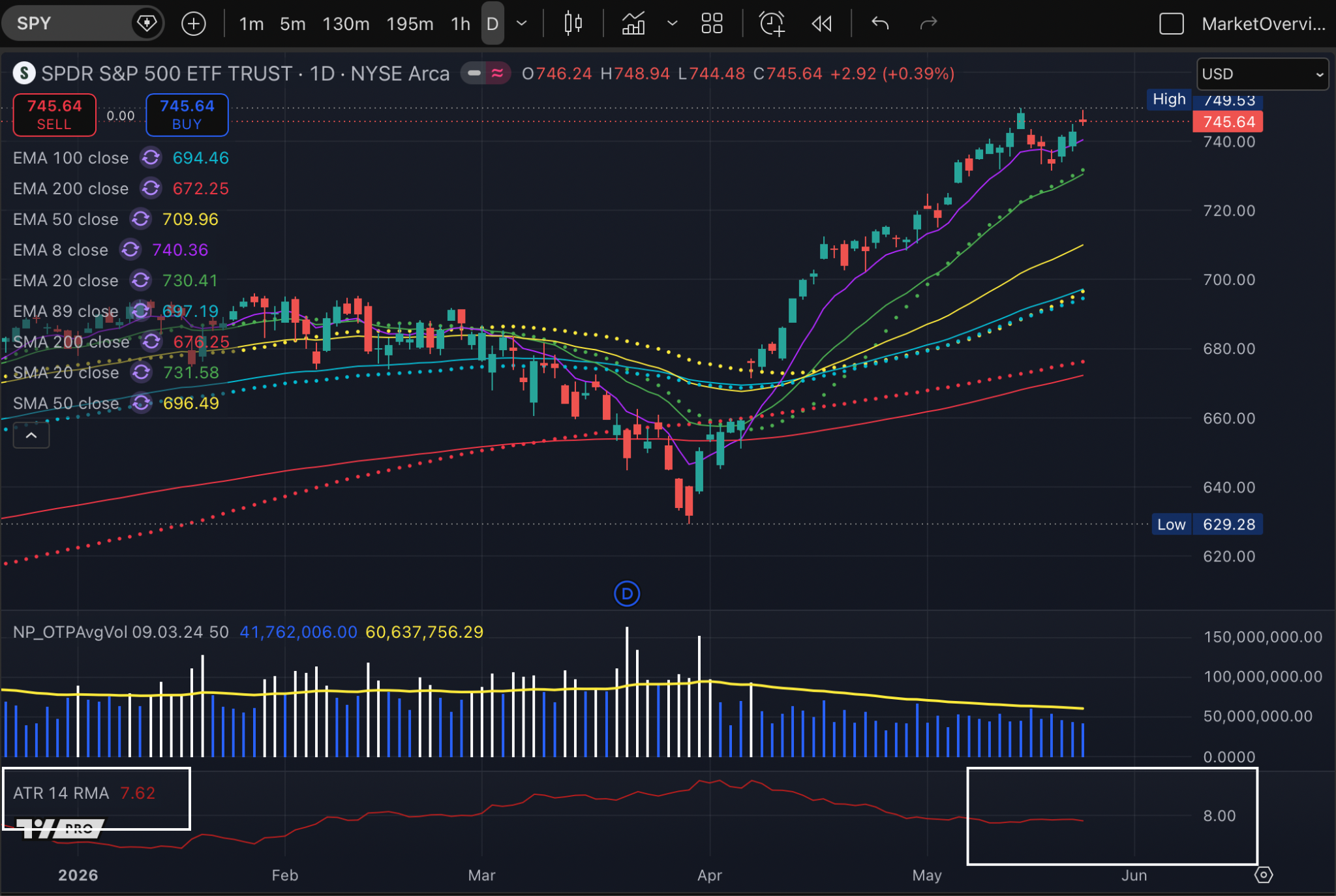
First, we like to use a Daily Chart of SPY and load up the Average True Range (ATR) indicator. We find that short term options work best when the Daily ATR is between 6-8.
When the ATR is in that range, we will typically see directional moves in both directions that tend to follow through vs settling into a choppy range. The follow through is needed for these trades to work quickly before the time decay kicks in and hurts the positions.
If we have an ATR below 6, we tend to favor using more longer term options where we have more time for the stock to make the directional move we are looking for.
- Daily SPY Volume
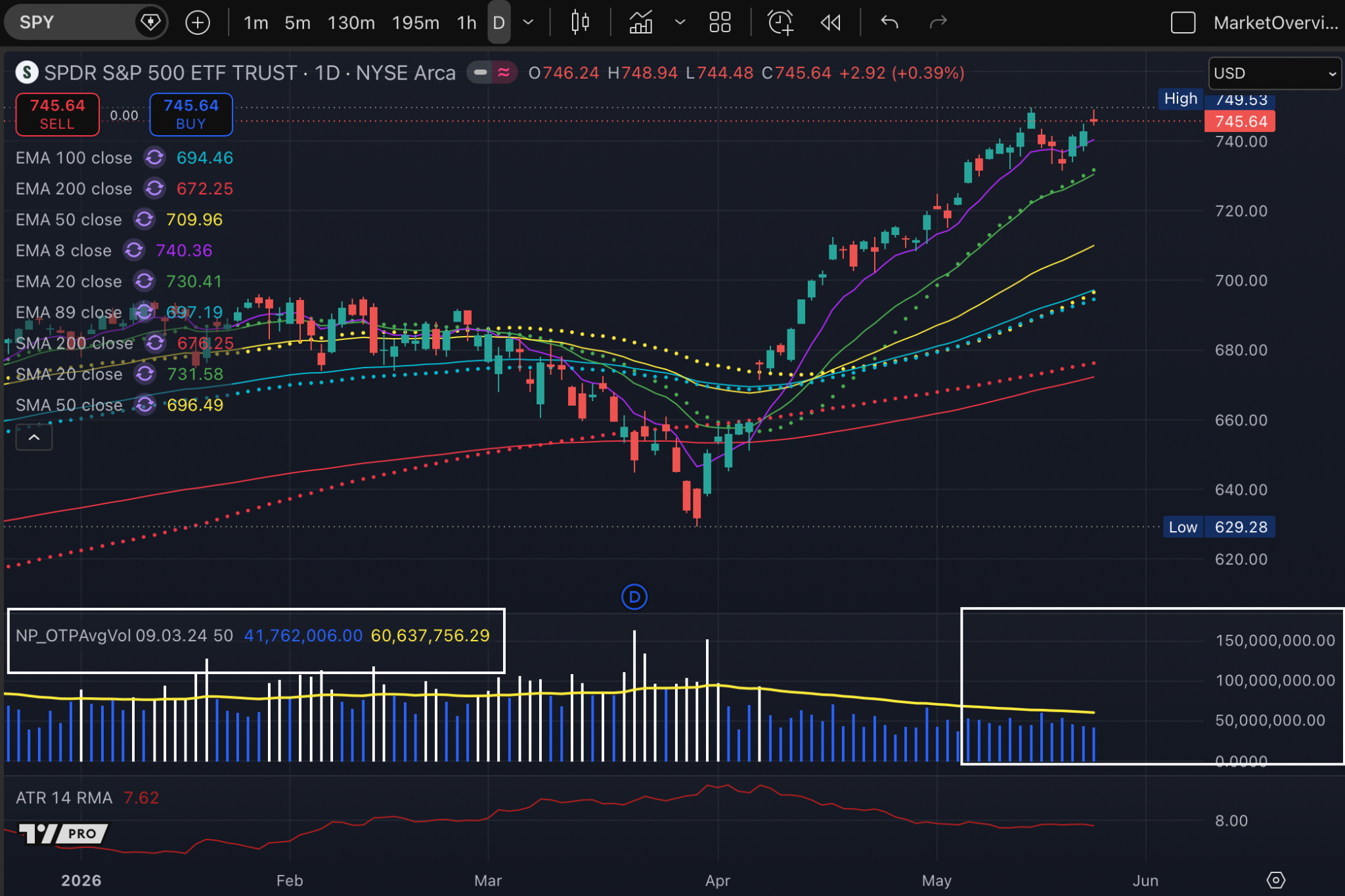
Good volume is crucial in helping us see follow through on the directional moves. To gauge the overall volume, we like to also use the SPY Daily chart. We find the best moves happen when we have daily volume in the 70-100 million share range.
It’s also nice to see volume expanding over a stretch of a few days as well. That is a better indication of volume confirmation vs just having one active day that could be a result of a news headline.
When you see 70-100 million SPY shares trading on a daily basis combined with an active ATR, then the market is giving you the green light to get more aggressive with the trades that you are taking. One way to do that is with the shorter term options.
- Advancers vs Decliners
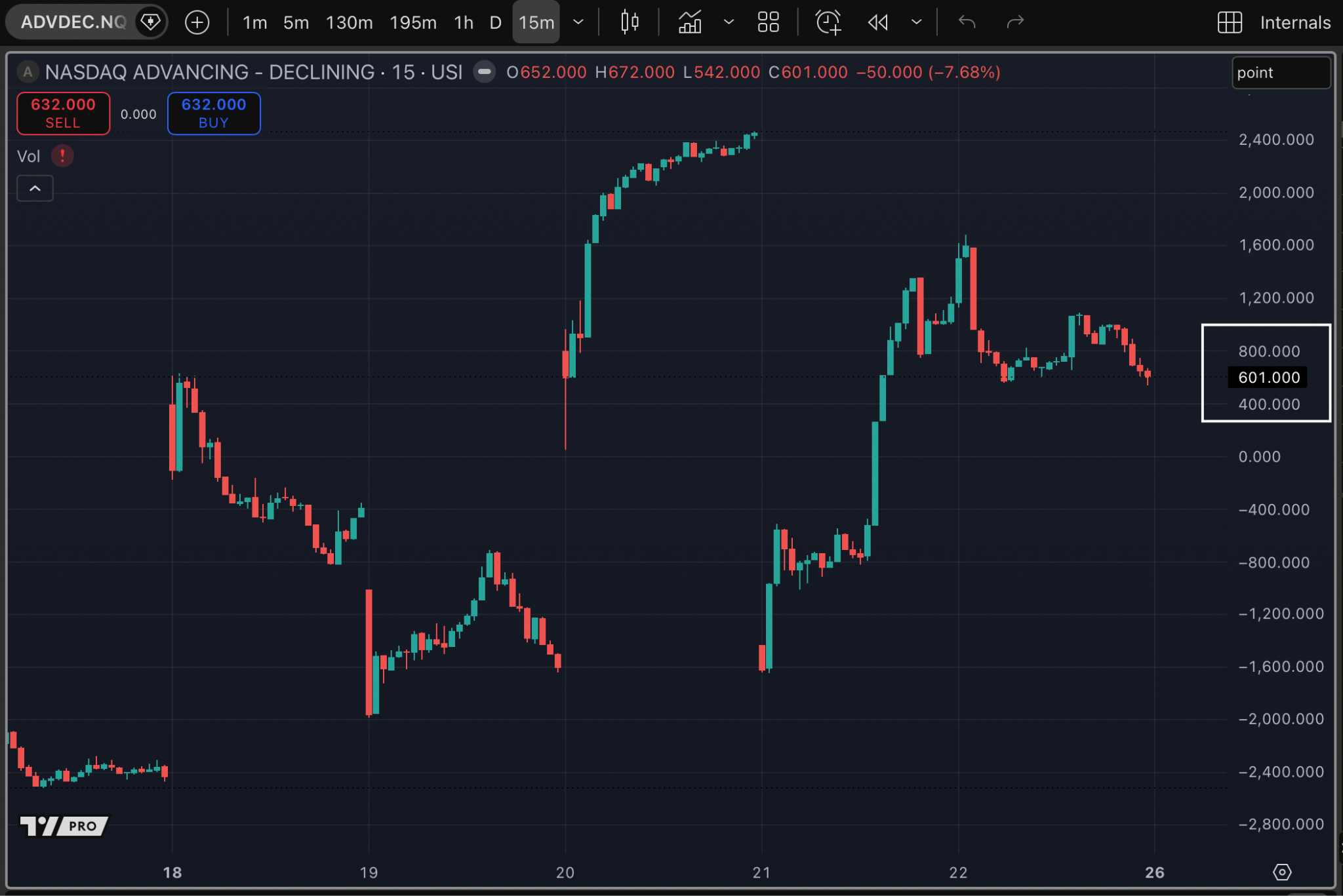
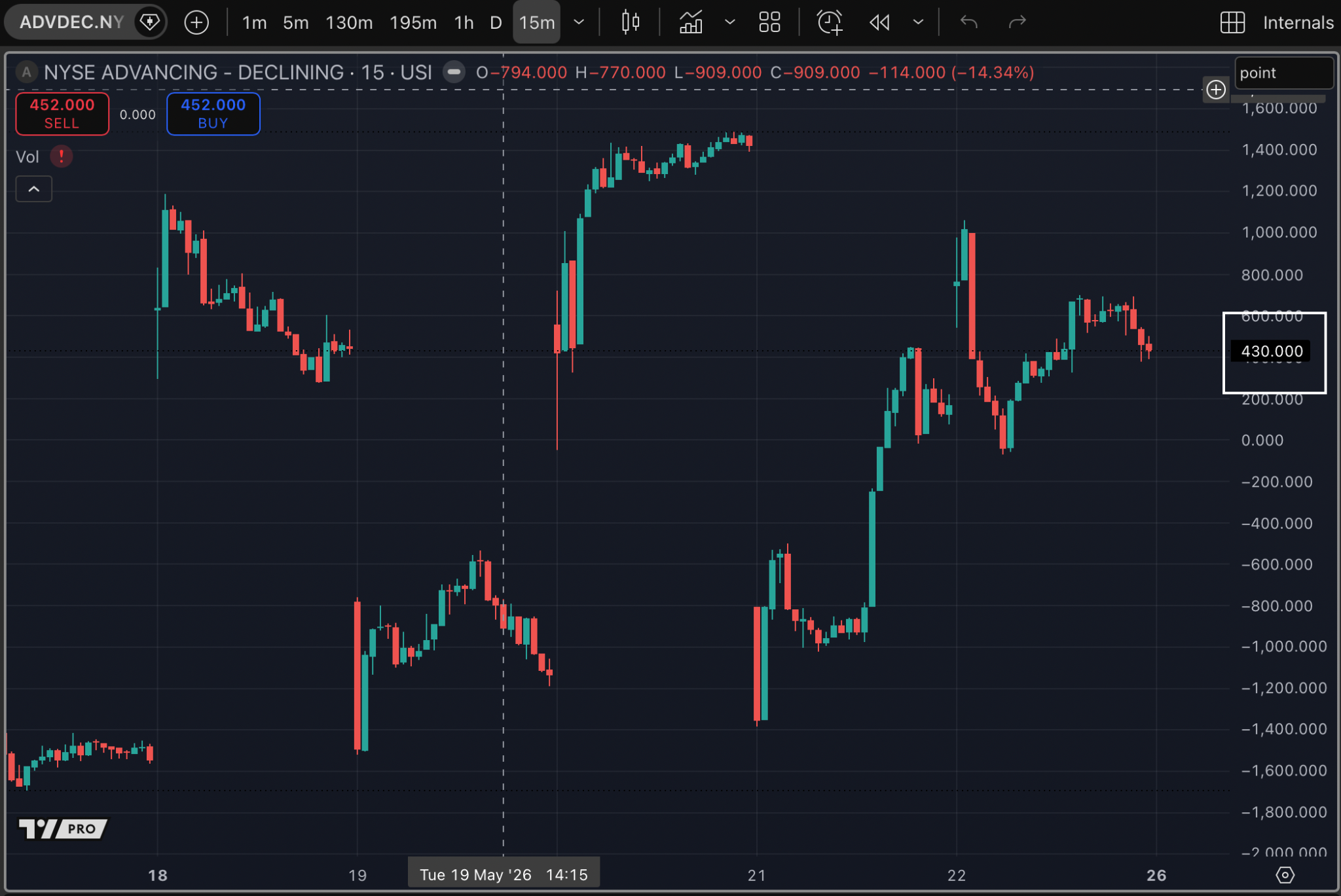
We like to look at the number of stocks moving higher or lower on the session. We look at this ratio on both the NYSE and the Nasdaq stocks. In an active market where we are seeing good moves in both directions, we like to see this number at +1000 on the upside or -1000 on the downside.
When this number is at +1000 or above, that indicates broad based buying in many areas of the market. This will lead to a better chance of the directional moves following through.
When this number is at -1000 or below, that indicates broad based selling in many areas of the market. This will lead to a better chance of the directional moves following through on the downside.
If we don’t see these extremes, it can oftentimes mean we are in a choppy market environment that is move conducive to either using longer term options or different options strategies like credit spreads that will do better in slower markets.
Example: When the Setup Is Right but the Expiration Is Wrong
One of the easiest mistakes to make with options is confusing a valid trade idea with the right expiration choice. A setup can make sense directionally, but still be a poor fit for 0DTE options.
For example, assume SPY is pushing toward a breakout level and a trader wants to buy a 0DTE call. At first glance, the trade may look reasonable. Price is near resistance, the trader sees a possible breakout, and the option is cheap enough to make the potential return look attractive.
But now look at the market conditions.
- Daily SPY ATR is below 6.
- Daily SPY volume is under 70 million shares.
- Advancers vs. decliners are neutral instead of showing broad buying pressure.
That does not mean the bullish idea is automatically wrong. It means the expiration may be wrong.
A 0DTE call needs the market to move quickly. If ATR is low, volume is light, and breadth is neutral, the market may not have enough speed or participation to support the immediate follow-through that a same-day option requires.
In that case, the trader is not just betting on direction. They are also betting on timing. They need the breakout to happen soon, move far enough, and do it before time decay takes over. That is a much harder trade.
Bad Match
Buying a 0DTE call when the setup may need more than one session to work. The trade idea might be valid, but the expiration gives it very little room for delay, chop, or a slow breakout.
Better Match
If the directional idea is still valid, a weekly option or a 20–40 DTE option may be a better fit because the trade has more time to develop. The other choice is to skip the trade until ATR, volume, and breadth confirm that the market is moving fast enough for shorter-term options.
The lesson is simple: do not choose 0DTE just because the option is cheaper or the potential return looks bigger. Choose the expiration that matches the speed of the market and the amount of time the trade realistically needs.
Best Uses for 0DTE and Weekly Options
1. Short-Term Swing Trades
If you believe a stock will move over the next:
- 1–4 trading days
- Several sessions
- Into a catalyst
Examples:
- Trading a bounce in AAPL
- A breakout setup in AMZN
- A short-term pullback trade in TSLA
This gives the trade time to work without paying excessively for time premium.
Weekly Options Trade Criteria
- Daily SPY ATR between 6-8
- Daily volume between 70-100 million shares
- Look for positions with a 1-3 day outlook
- Use options that have 3-6 days left to expiration.
- Use long calls and long puts that are 1 strike out of the money.
Best Uses for Monthly or Longer-Dated Options
1. Position Trading
If you believe a stock will move over the next:
- 3–20 trading days
- Into a trend that will follow through for a number of sessions
This can mean using a mix of weekly and monthly options.
Examples:
- Bullish AI sector trend
- Long-term breakout in NVDA
- Market recovery after a correction
Monthly / Longer-Dated Options Trade Criteria
- We would still ideally like to see the criteria outlined in the Short Term Options Trade Criteria. However, if we start to see the following numbers we will favor going out to weekly or monthly options with 20-40 days left to expiration.
- Daily SPY ATR below 6.
- Daily volume below 70 million shares
- Look for positions with a 3-20 day outlook
- Use options that have 20-40 days left to expiration.
- Look for long calls and long puts that are 1 strike in the money.
Conclusion
Most retail traders make the mistake of looking for the home run trades on every position that they open up. In reality, markets don’t make it that easy for us. Instead, we prefer to make sure the trades that we are taking match up with the current market conditions.
There are many cases when using the more conservative longer term options makes more sense vs using the popular 0DTE options on every trade. Doing so will produce better results long term.
Using the criteria above will help you make informed decisions based on numbers instead of basing those decisions off emotions.
