
- July 24, 2026
- Posted by: CoachMike
- Category: Trading Article

If you have ever picked the right market direction and still lost money on an options trade, the problem may not have been your analysis. It may have been the strategy you used.
Buying a call or put can look simple: choose a direction, pay the premium, and wait for the stock to move. But getting the direction right is only part of the equation. The move must often happen far enough and fast enough to overcome time decay and changes in implied volatility.
That can be a difficult combination in a choppy market, where stocks move back and forth without establishing a lasting trend.
Credit spreads offer another approach. They can be structured to benefit from time passing, do not always require a large move, and define the maximum possible loss before the trade is placed. That does not make them risk-free, but it can make them a useful alternative when buying calls and puts offers little room for error.
Why Long Calls and Puts Can Struggle In Choppy Markets
When you buy an option, you pay a premium for the right to buy or sell the underlying stock at a particular price. The value of that option is influenced by several factors, including the stock price, time remaining until expiration, and implied volatility.
This creates three common challenges:
1. The stock may not move far enough. A small move in the expected direction might not offset the premium paid.
2. The move may take too long. Options generally lose time value as expiration approaches. This effect is known as time decay, or theta.
3. Implied volatility may fall. Even when the stock moves in your direction, a decline in implied volatility can reduce the option’s value.
Imagine buying a call because you expect a stock to rise. The stock does move higher, but it takes several days and the move is modest. The call can still lose value because time decay and falling volatility outweigh the benefit of the price increase.
In other words, buying an option often requires more than being directionally correct. You also need the timing and size of the move to cooperate.

What is a credit spread?
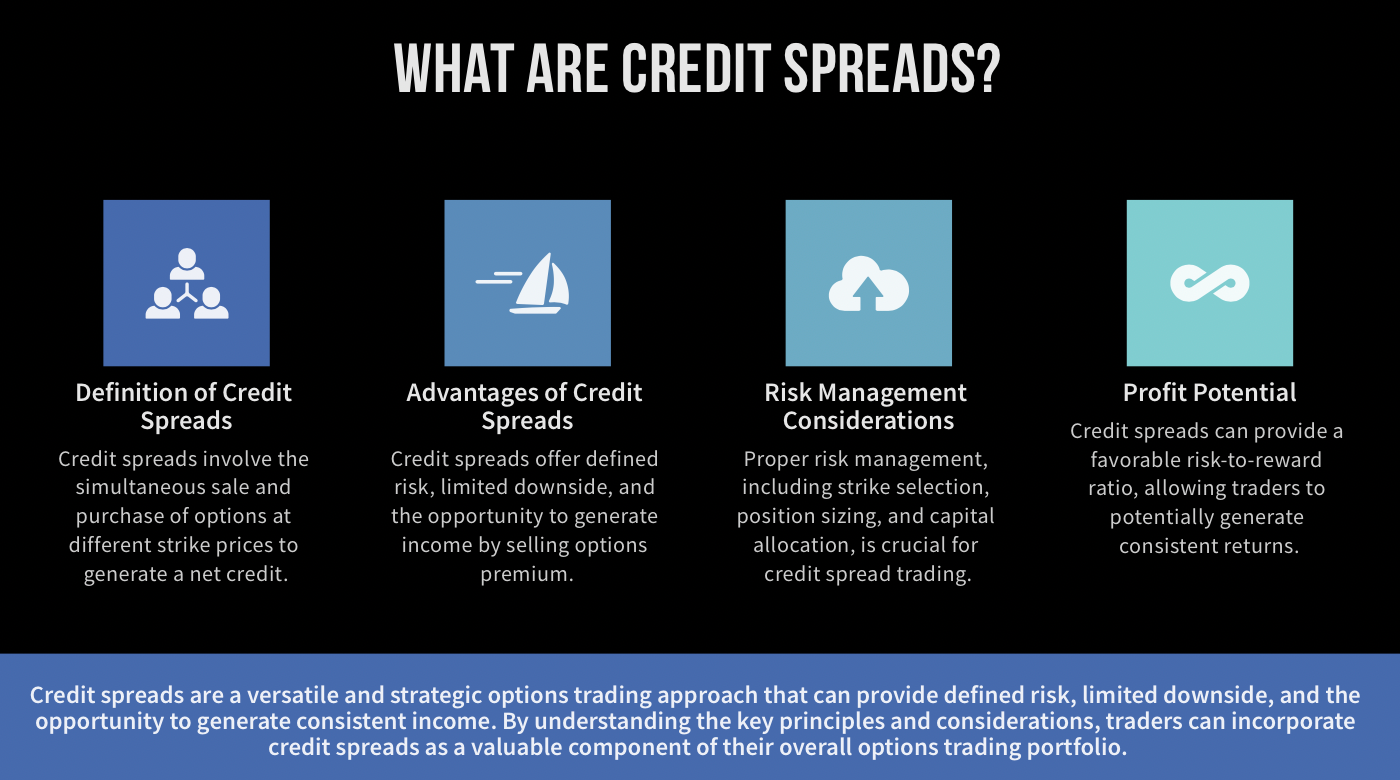
A credit spread combines two options on the same underlying stock with the same expiration date:
– One option is sold to collect premium.
– Another option is purchased at a different strike price to limit the trade’s risk.
Because the premium received from the option sold is greater than the premium paid for the option purchased, the position produces a net credit when it is opened.
The width between the strikes, minus the credit received, determines the maximum loss. The credit received determines the maximum profit. Both amounts can be calculated before entering the position.
For example, suppose a trader opens a $5-wide credit spread and collects a $2.00 credit. Because one options contract normally represents 100 shares:
– Maximum profit: $200, before fees
– Maximum loss: $300, before fees
The trader is accepting limited profit potential in exchange for defined risk and more than one possible path to a profitable outcome.
Two Common Types of Credit Spreads
The spread a trader chooses depends on the market outlook.
Bull Put Spread
A bull put spread involves selling a put at a higher strike and buying a put at a lower strike. It is generally used when the trader expects the stock to rise, remain flat, or at least stay above the short put strike.
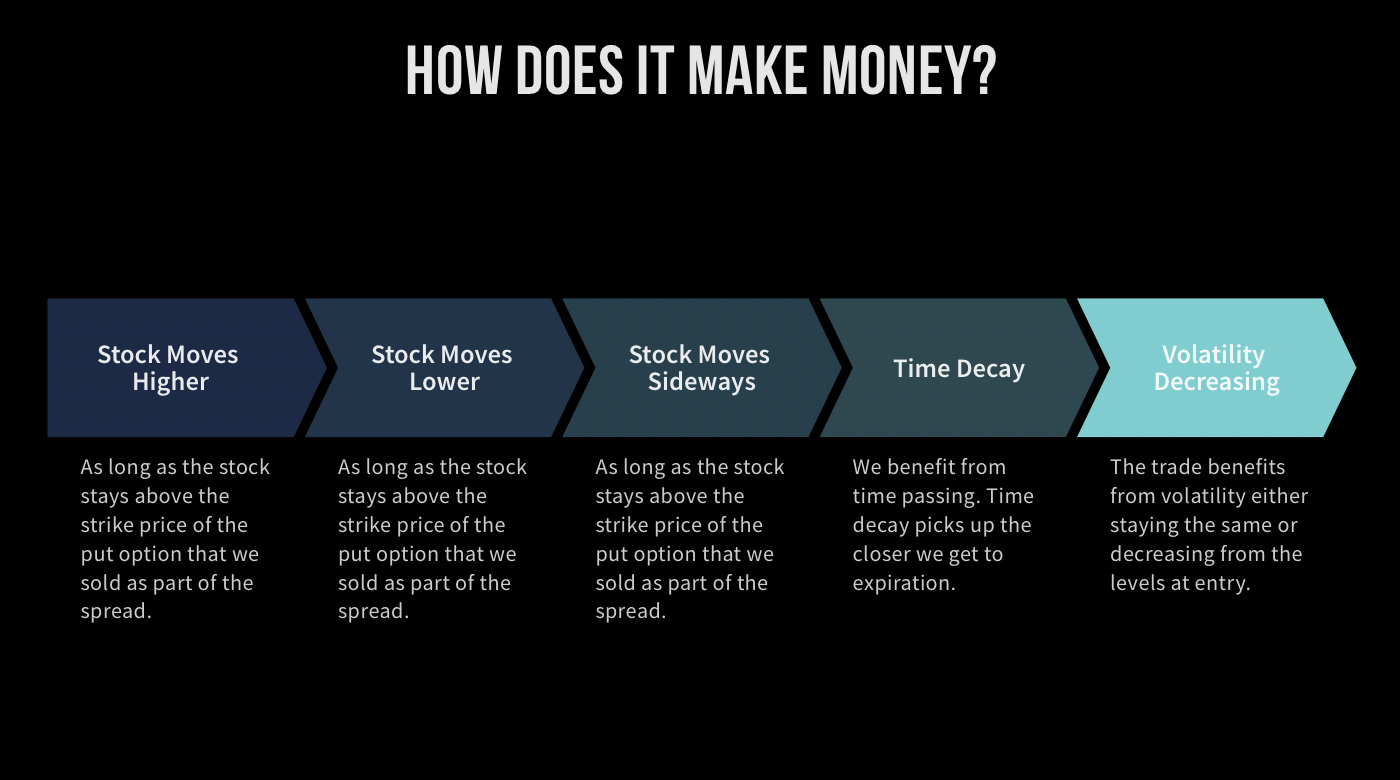
The position reaches its maximum profit if both options expire out of the money. However, many traders choose to close the position before expiration once it has captured a predetermined portion of the available profit.
Bear Call Spread
A bear call spread involves selling a call at a lower strike and buying a call at a higher strike. It is generally used when the trader expects the stock to fall, remain flat, or stay below the short call strike.
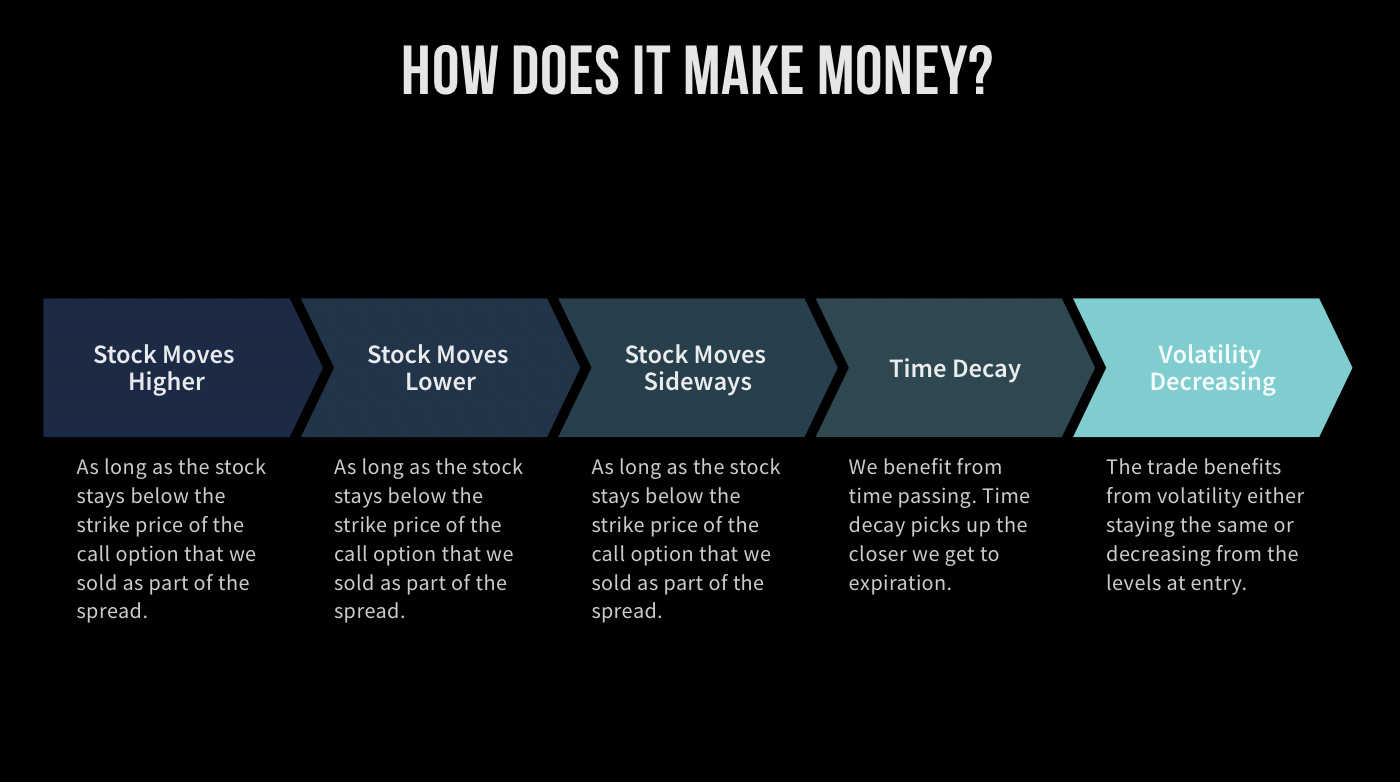
Here again, the stock does not necessarily need to make a dramatic move. It may be enough for the price to remain on the desired side of the short strike while time passes.
Why Credit Spreads Can Fit a Choppy Market
Credit spreads can provide a wider margin for error than buying a call or put outright. Depending on the strikes selected, a trade may be profitable if the stock:
– Moves in the anticipated direction
– Remains relatively flat
– Moves slightly against the position but stays beyond the relevant break-even level
– Experiences enough time decay
– Sees implied volatility remain stable or decline
These are not five separate guarantees. They are interacting factors that may allow the position to work without a large directional move.
That distinction matters in a range-bound market. Instead of asking, “How far will this stock move?” a credit-spread trader can ask, “What level is the stock unlikely to cross before this trade is closed?”
The goal shifts from predicting a major move to identifying a price boundary and managing the risk around it.
Time Decay Changes Sides
Time decay is one of the biggest obstacles for buyers of short-term options. In a credit spread, it can become an advantage.
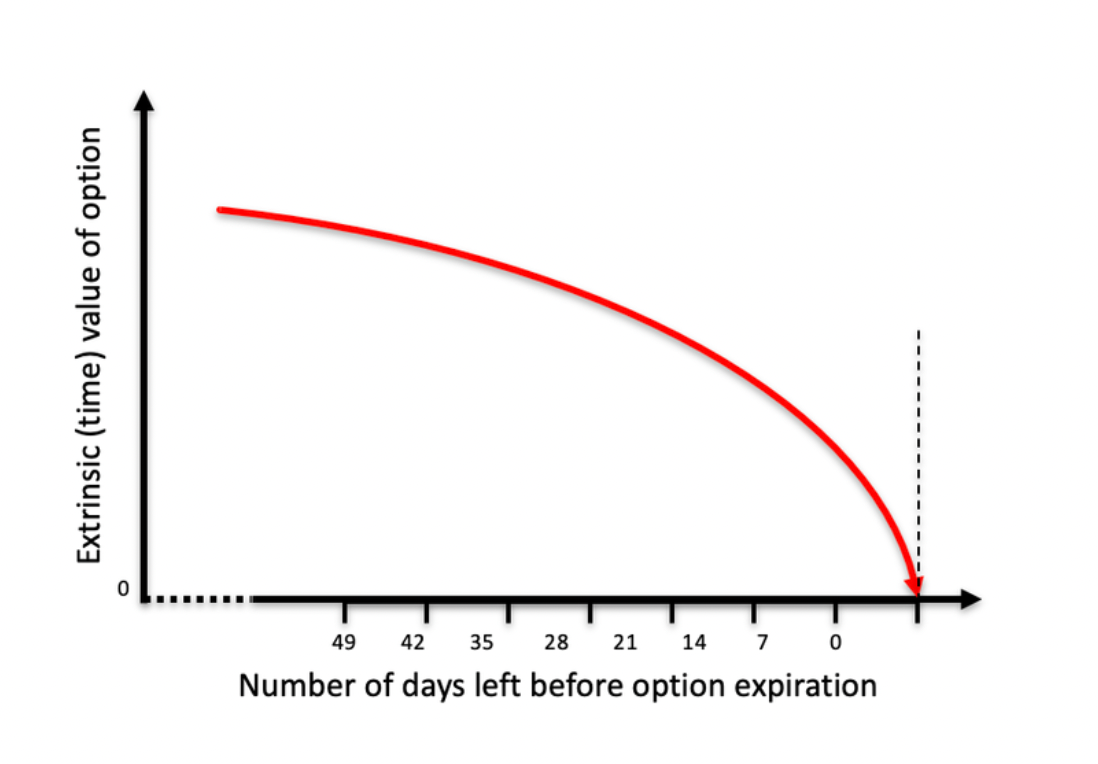
The short option typically loses time value as expiration approaches. If the stock remains in a favorable area and other factors do not overwhelm the position, the spread may become less expensive to buy back. The trader can then close it for less than the original credit and retain the difference as profit.
Time decay picks up as the options get closer to expiration. This can help benefit short term credit spread traders as the time decay takes the pressure off needing a big directional move as well as needing to be spot on with the timing of the trade.
For example, if a spread is sold for a $1.00 credit and later bought back for $0.50, the trader keeps $0.50, or $50 per spread before fees.
This is why some credit-spread plans target a percentage of the maximum available profit instead of holding until expiration. Closing early can release capital and reduce exposure to the faster price changes that options may experience near expiration.
Why Liquid Technology Stocks Can Be Attractive For This Approach
Highly traded technology stocks, including the Magnificent Seven, often have active options markets with frequent expirations and meaningful short-term price movement. Strong liquidity can help traders enter and exit spreads more efficiently, although fills are never guaranteed.
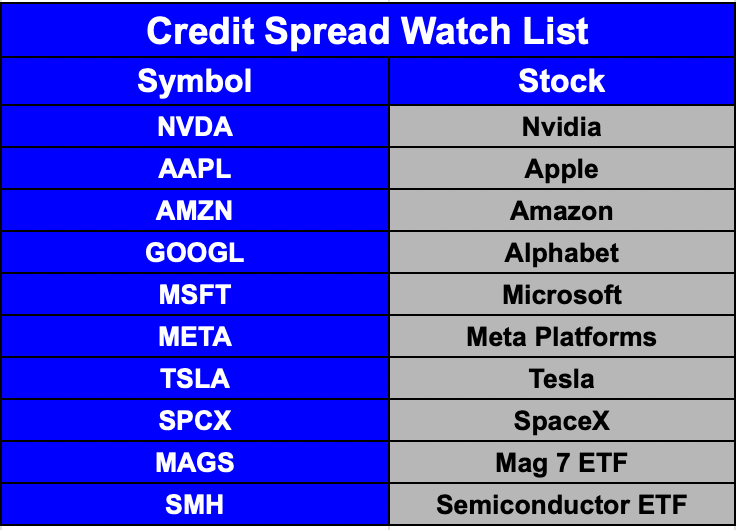
These stocks can also move sharply in response to earnings, interest-rate expectations, artificial-intelligence headlines, and broader market news. That activity creates opportunity, but it makes defined risk and active management especially important.
Credit Spread Criteria
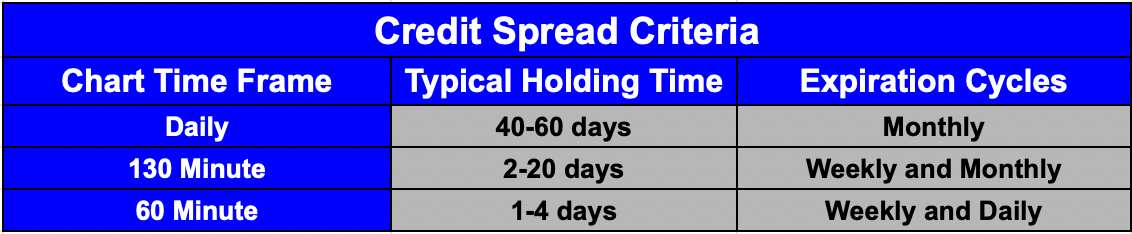
Credit spreads can be taken using a mix of different charting time frames. We like to use a mix of daily, 130 min, and 60 min chart intervals.
The chart interval will impact what options expirations we use. We like to use monthly options when basing trades off the daily chart. When using the 130 min charts, we like to use a mix of weekly and monthly options. With the shorter term 60 min charts, we like to use a mix of the daily and weekly options.
How To Select Strike Prices
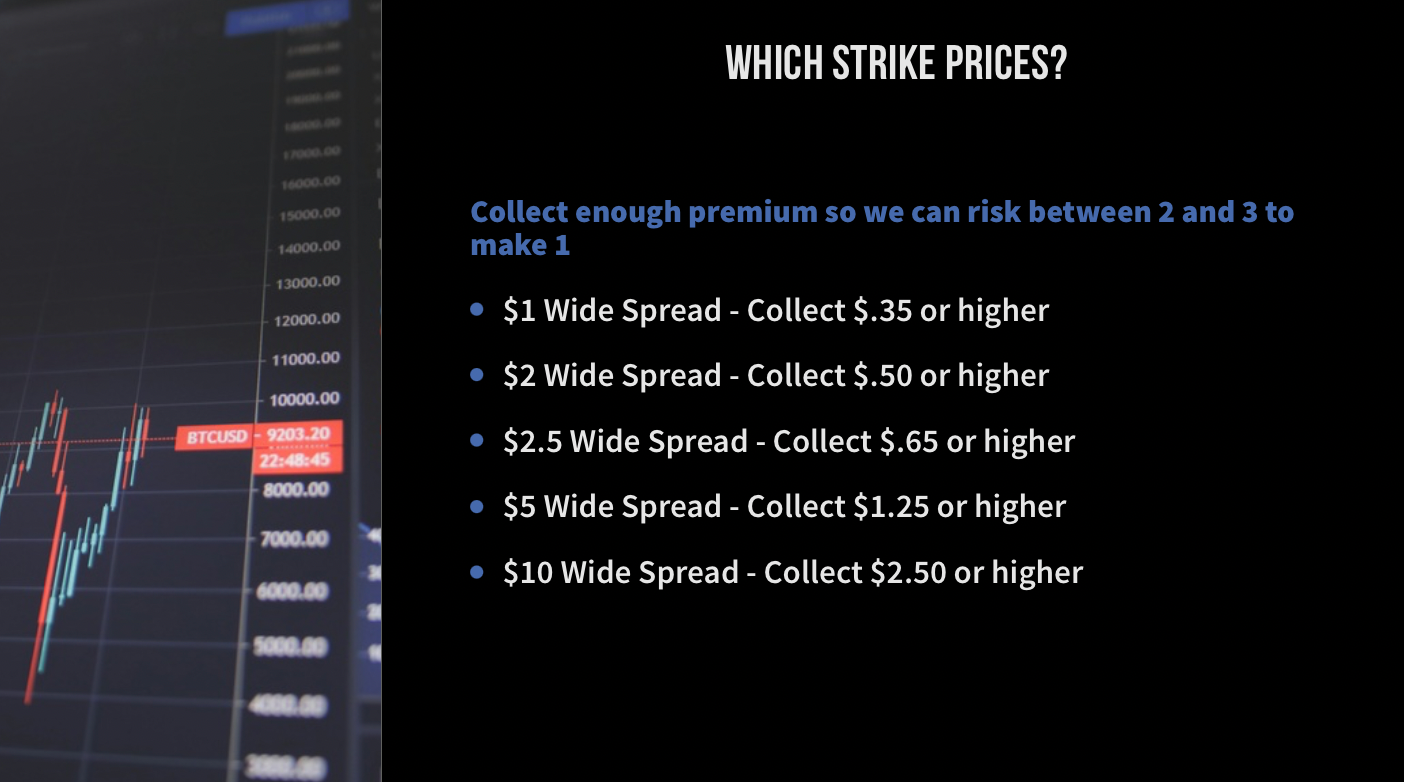
When setting up our credit spreads, we like to make sure we are collecting enough premium. We have listed the minimums that we like to collect on our credit spreads below.
The Bottom Line
Buying calls and puts can be effective when a trader expects a strong move and gets both the direction and timing right. Credit spreads solve a different problem.
They allow traders to define their risk, collect premium, and potentially benefit when a stock moves modestly or remains within a range. In a choppy market, that flexibility can be valuable because success does not always depend on catching the next explosive move.
The trade-off is limited profit, meaningful downside risk, and the need for careful position management. A credit spread is not automatically the better trade. It is simply a structure that may better match certain market conditions.
For traders who want a more systematic way to apply that structure to the market’s most active technology names, Mag7 Options Edge provides defined-risk trade ideas, real-time opening and closing alerts, training, and ongoing support.
